

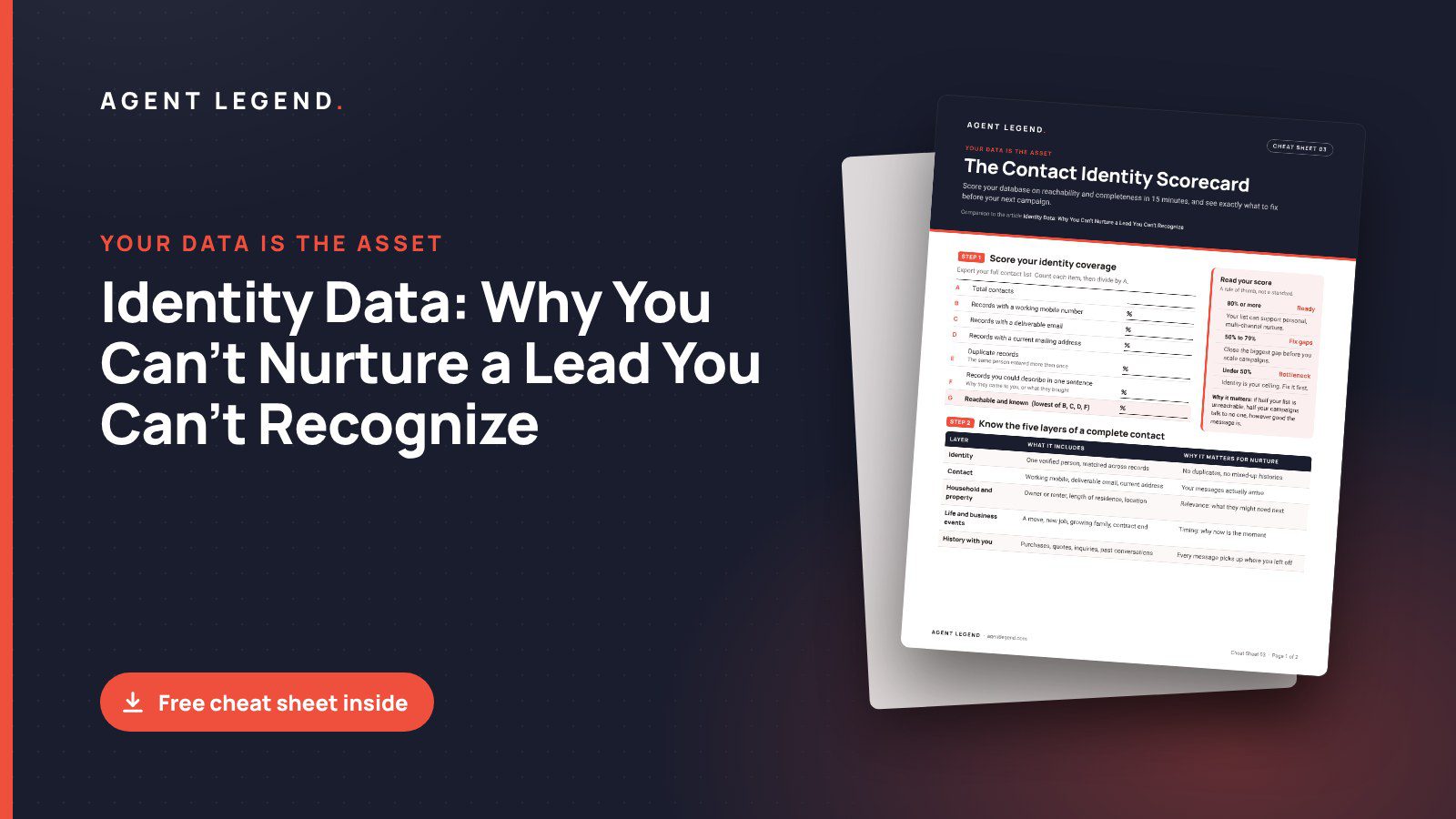
Before any message, lead score or AI agent can do its job, you have to know who is on the other end. For a large share of most databases, nobody can answer that question.
The short answer
Identity data is what connects a name in your CRM to a real, reachable person: a working phone number, a current email and address, and enough about them to know what they might need next. Without it, nurture campaigns send to dead numbers, lead scores guess, and AI agents start every conversation blind. Fixing identity is the first step in lead nurturing, not a cleanup project for later.
Free cheat sheet
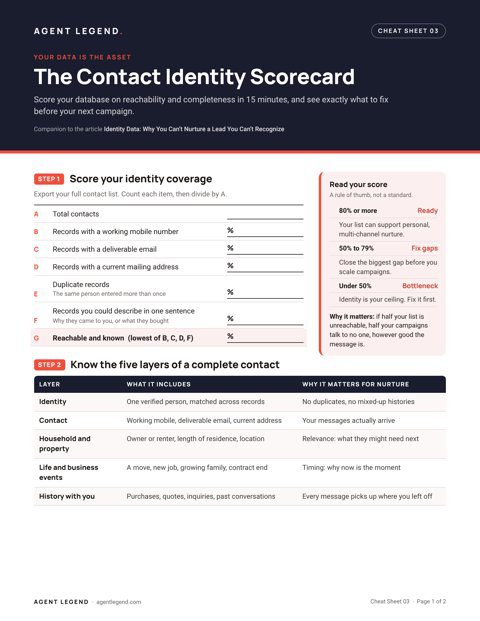
The Contact Identity Scorecard
Score your database on reachability and completeness in 15 minutes, and see exactly what to fix first.
Download the cheat sheet (PDF)What identity data actually means
Most people hear “data” and think of a spreadsheet of names and emails. That is contact data. Identity data goes further. It answers three questions about every record:
- Who is this, really? One verified person, not three partial records with slightly different spellings.
- How do I reach them today? A mobile number that still works, an email that still delivers, an address they still live at.
- What do I know about their situation? Homeowner or renter, how long they have been there, what they bought from you, and what has changed since.
The first two make your messages arrive. The third makes them relevant.
How a database loses track of people
No one sets out to build a messy list. It happens on its own. People change phone numbers, move, switch jobs and use a different email on every form they fill out. The same person ends up in your CRM three times: Bob Smith from a webinar, Robert Smith from a quote request and rsmith from the newsletter. Purchased leads arrive half complete. Typos never get fixed.
None of this throws an error. Your follow-up just gets quietly worse every month.
What it costs when identity is missing
- You pay to send messages to numbers and inboxes that no longer exist.
- The same person gets contacted three times by three people on your team, and feels it.
- Lead scores rank partial records, so your best prospects can sit at the bottom of the list.
- AI agents open with “Hi there” because they do not have a first name, let alone a reason to reach out.
- An opt-out recorded on one duplicate does not follow the person to the other two, which is a compliance problem waiting to happen.
Identity first, then nurture
If you want better nurture results, fix things in this order:
- Match every record to a real person. This is identity resolution: deciding which records belong to the same individual.
- Verify and fill the contact points. Confirm phones and emails work, and append the ones that are missing.
- Merge duplicates into one record, carrying every opt-out and note forward.
- Add context where you have a legitimate reason to use it, such as homeownership, length of residence or recent life events.
- Keep it current. Records decay every month, so a one-time cleanup is out of date by the next quarter.
Only then does the rest of your playbook work. Reaching the contacts who never click depends on knowing who they are. So does every score and every AI conversation.
A quick identity audit you can run this week
Pull your full contact list and count five things: records with a working mobile number, records with a deliverable email, records with a current mailing address, duplicate records, and records you could describe in one sentence beyond the name. Divide each by your total.
Those percentages are the ceiling on your nurture program. If only half your list is reachable, half your campaigns are talking to no one, however good the message is. The cheat sheet above walks you through the math and what to fix first.
Handle personal data with care
Identity data is personal data, and it deserves respect. Use it for purposes your contacts would reasonably expect. Honor opt-outs and privacy requests across every record for the same person. Buy enrichment only from providers that source data lawfully, and check your state’s privacy rules and channel consent requirements with your counsel.
The bottom line
Every nurture program has a ceiling, and identity sets it. You cannot have a relevant conversation with a person you cannot recognize. Fix who before you worry about what to say.
That is why Agent Legend verifies, enriches and maintains contact identity across your database, so every campaign, score and AI conversation starts with a real person.
Free cheat sheet
Score your database in 15 minutes
Reachability, completeness and duplicates on one page, plus a fix-it order and privacy guardrails.
Download the cheat sheet (PDF)Frequently asked questions
What is identity resolution?
Identity resolution is the process of matching the records in your database to real, unique people. It connects a name, phone, email and address that may be scattered across several records into one verified profile, so you know who you are talking to and how to reach them.
How often should I refresh the data in my contact database?
Continuously if you can, and at least before any major campaign. People change numbers, move and switch jobs all the time, so a list that was accurate last year is not accurate today.
Is it legal to use enriched consumer data for marketing?
It depends on where you operate and how you use it. Work with providers that source data lawfully, honor opt-outs and privacy requests across every record, and confirm consent rules for texting and calling with your counsel. This is general guidance, not legal advice.